Credential stuffing at machine speed
Automated systems test millions of password combinations against your email portal every hour using passwords stolen from other breaches.
Critical information for law firms
AI-enabled attacks against organizations — including law firms — have grown significantly. Autonomous reconnaissance systems probe email portals, case management systems, and remote access infrastructure around the clock — with zero human oversight, infinite patience, and a learning curve that accelerates with every attempt.
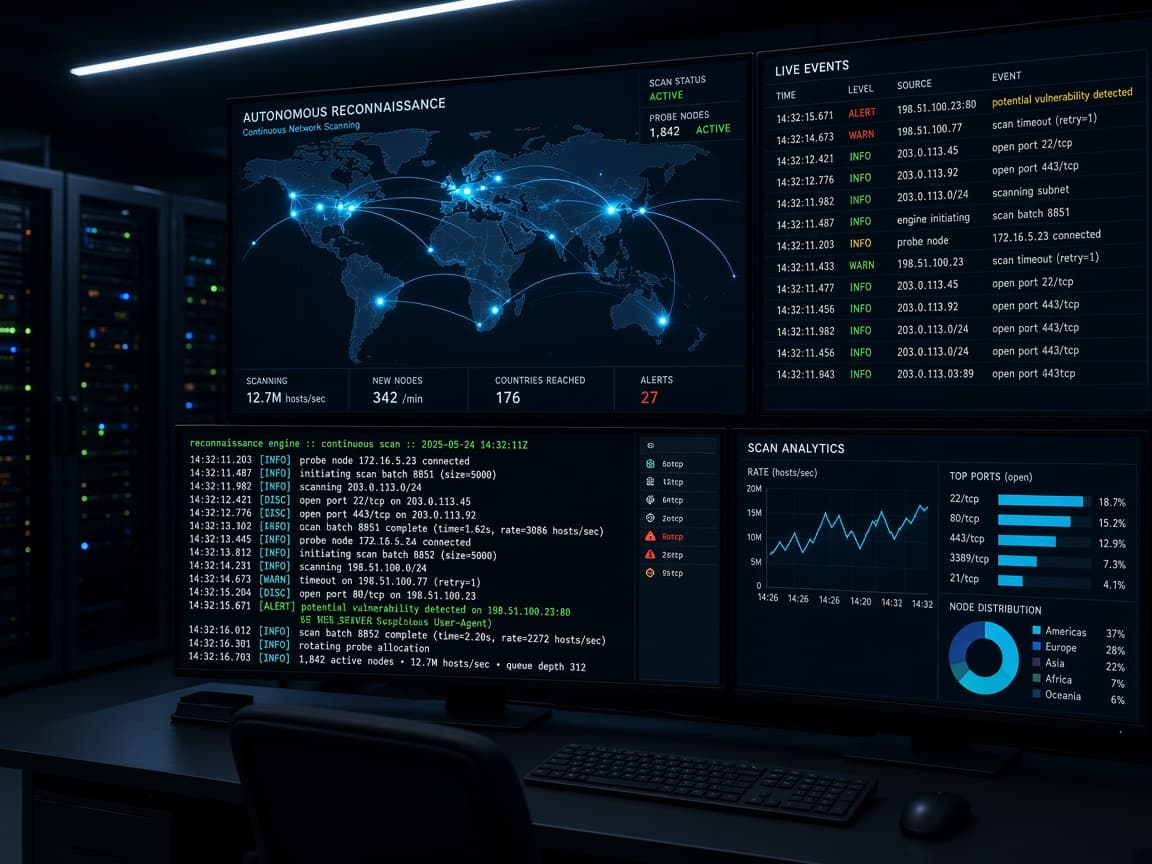
Machine-speed threat


Why this matters
We created this page because virtually every law firm we have worked with has told us the same thing: “We wish someone had shared this with us before the incident happened.”
What follows is not a scare tactic. It is not a sales pitch dressed up as a warning. It is a plain-language summary of the regulatory, ethical, and insurance frameworks that apply to law firms in the United States — frameworks that most firms only discover after a breach has already occurred.
Please understand: A data breach does not automatically mean every consequence listed here will happen to you. This information is intended to show you what is possible under current rules, standards, and documented outcomes, so you can make informed decisions about your firm's security posture with your eyes open.
No one else is putting this together in one place. State bars publish rules. The ABA publishes opinions. Insurers publish requirements. Security firms publish threat reports. But no one connects the dots for the practicing attorney. We are connecting them here.
What is coming for you
Traditional attackers operated at human speed. They made mistakes. They took weekends off. Today's threat actors deploy AI systems that learn, adapt, and execute at machine speed. The asymmetry is not two-to-one or five-to-one. It is infinite-to-one — because the AI never stops, never forgets, and never needs a paycheck.
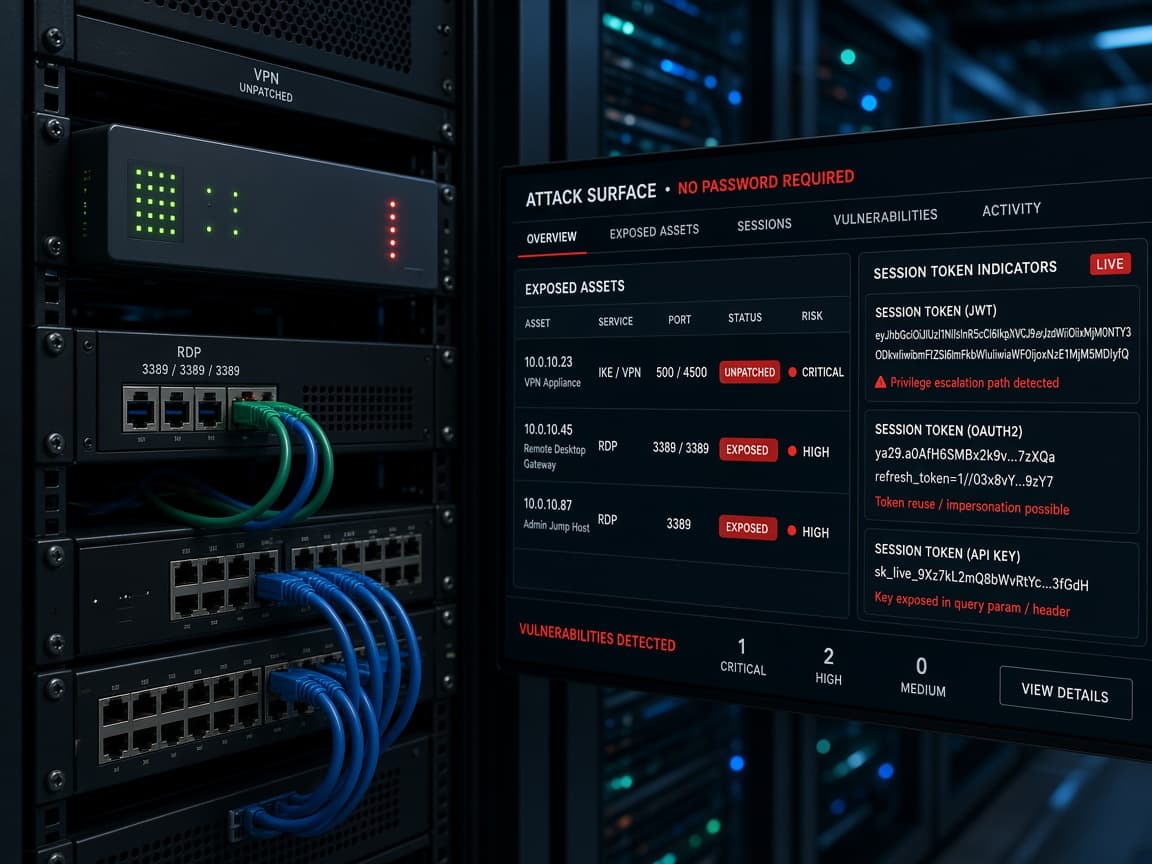
No username or password required
Modern attacks exploit weaknesses in the software and infrastructure you rely on every day — weaknesses that exist independently of your staff's behavior or password strength.
Zero-day exploits
Attackers exploit security holes in widely used software — file transfer platforms, VPNs, email systems — before the vendor knows the vulnerability exists. No credentials required. In October 2025, Williams & Connolly was breached by state-sponsored hackers using exactly this method.
Supply chain attacks
Rather than attacking your firm directly, attackers compromise a software vendor you use. The 2023 MOVEit Transfer breach accessed data from thousands of organizations — including law firms — without ever touching a user credential.
Session hijacking and token theft
Even with a perfect password, attackers can steal the digital session token that keeps you logged in — bypassing authentication entirely.
Unpatched remote access and VPN
Old, unpatched remote access software often contains publicly known vulnerabilities that allow entry without any credentials at all.
Autonomous reconnaissance systems scan, map, and analyze your firm's digital footprint continuously — at a speed and scale no human security team can match. They do not sleep. They do not take holidays. They learn from every interaction.
Automated systems test millions of password combinations against your email portal every hour using passwords stolen from other breaches.
Large language models write phishing emails with perfect grammar, contextual awareness, and references to your firm's actual cases, colleagues, and clients.
AI-generated voices can impersonate partners or clients over the phone to authorize wire transfers, release confidential files, or manipulate staff.
Autonomous systems probe your website, remote access portals, and cloud storage 24 hours a day. When they find a gap, they exploit it immediately.
Once inside, AI maps the architecture, finds case files and financial data, and calculates the optimal time to detonate ransomware.
It is not a fair fight.
Source: CrowdStrike Global Threat Report 2025–2026; Imperva/Thales 2026 Bad Bot Report.
Before the wave. Before the breach notifications. Before the disciplinary inquiries.
That window is closing.
The regulatory framework
Unlike industries under a single federal regulation, law firms navigate six overlapping mandates — state bars, the ABA, state attorneys general, and insurance carriers. None issues a unified checklist. Most firms discover these obligations only after an incident.
A first-time breach from negligence is more likely to result in a public reprimand or suspension than disbarment. Disbarment is the maximum penalty, typically reserved for intentional misconduct or repeated violations.
Source: ABA Model Rule 1.6(c), adopted by state bars nationwide. ABA Formal Opinion 477R (encryption requirements).
Beyond the rules
There is another force at work — one that does not issue public opinions or publish rulebooks. Your malpractice insurance carrier and your cyber liability insurer have become one of the most powerful enforcement mechanisms in law firm cybersecurity.
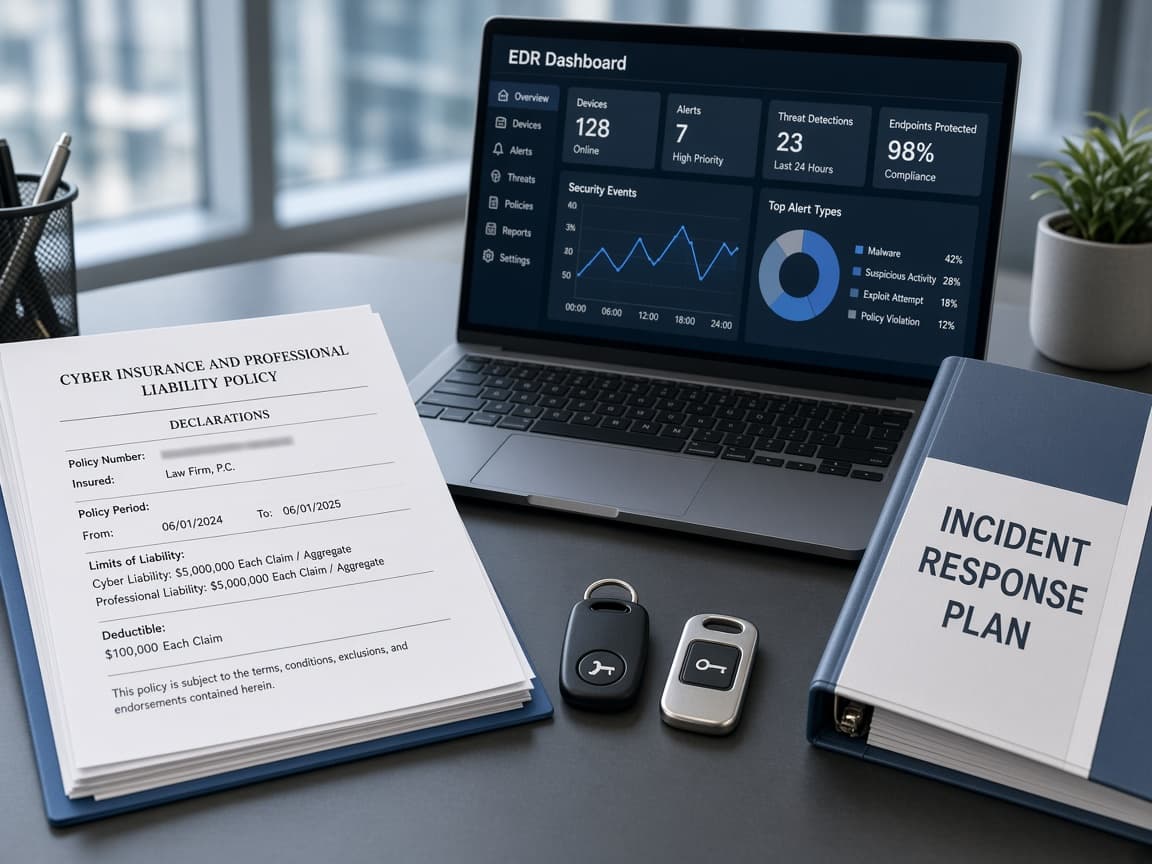
Coverage conditions
The carrier may refuse to pay for defense, investigation, notification, and settlement costs
The carrier may void the policy retroactively, arguing that the firm misrepresented its security posture
The carrier may decline to renew, leaving the firm uninsurable or forced into a high-risk pool with prohibitive premiums
The carrier may sue the firm to recover amounts paid out, alleging negligent security practices
This is not a regulator threatening a fine. This is the entity supposed to pay your legal defense and settlement costs deciding not to — at the exact moment you need them most.
Source: STACK Cybersecurity, Law Firm Cybersecurity Requirements for Insurance Coverage (2025).
Documented outcomes
The outcomes below are documented, publicly reported events. They illustrate what is possible — not what will happen in any specific case. Every breach is different. Every firm's circumstances are different.
$8.5 Million
A law firm suffered a data breach exposing client confidential information. The resulting class action settled for $8.5 million — not because the firm acted with malice, but because its cybersecurity practices were found to fall below the "reasonable efforts" standard under applicable rules.
According to IBM's Cost of a Data Breach Report, the average cost of a data breach in the United States has reached approximately $10.2 to $11.5 million in recent years, with costs for professional services organizations — which include law firms — frequently exceeding the national average due to privilege exposure, multi-jurisdiction notification, and reputational harm.
Source: Maryland State Bar Association, Law Firm Settles Data Breach Lawsuit (2024). IBM Cost of a Data Breach Report 2025-2026.
Disciplinary Action
Multiple state bars have imposed public reprimands and suspensions on attorneys whose firms suffered breaches rooted in inadequate technology practices — shared credentials, absence of MFA, unencrypted storage of client data, and failure to implement basic access controls.
The discipline is typically not for the breach alone. It is for the failure to exercise reasonable efforts to prevent it under Rule 1.6(c) and the technology competence requirements of Rule 1.1.
Source: ABA cybersecurity guidance and various state bar disciplinary proceedings.
Coverage Denied
Firms that suffered breaches without MFA, EDR, or tested backups have faced coverage denials or non-renewals at the moment they most needed funds for defense counsel, forensic investigation, client notification, and regulatory response.
A coverage denial or rescission does not make headlines. It simply means the firm must pay all response costs out of operating revenue — or cease operations.
Source: STACK Cybersecurity, Law Firm Cybersecurity Insurance Analysis (2025).
2025–2026 Breach Wave
Williams & Connolly (October 2025) — Breached via a zero-day exploit by state-sponsored actors. Attorney email accounts were accessed.
Barclay Damon (May 2026) — Ransomware and data theft event.
Orrick (February 2026) — Data theft claimed by ransomware group; also faced class action litigation.
Herbert Smith Freehills and Goodwin Procter (2026) — Data breaches reported.
These were not small practices with no security budget. Their experiences illustrate that no firm is immune from the current threat environment.
Source: New York Times (Oct 2025), Reuters (Aug 2026), Law360 (June 2026), SecurityWeek, DeXpose, Breachsense.
Self-assessment
Below is a summary of controls that security professionals, malpractice insurers, and regulatory guidance currently identify as components of a “reasonable efforts” security posture. This is not an exhaustive legal checklist, and no single item determines compliance by itself. It is a starting point for conversation with your IT provider, your insurance broker, and your legal counsel.
This checklist is a starting point for conversation — not a legal opinion, not a guarantee of compliance, and not a substitute for advice from qualified counsel in your jurisdiction.
Where you stand now
We share this information not to alarm you, but because virtually every firm we have worked with has told us the same thing: they wish someone had shared it with them before the incident.
You now have a clear picture of the overlapping frameworks that govern law firm cybersecurity: state bar confidentiality and competence rules, ABA breach notification and encryption guidance, 50-state notification laws, state cybersecurity statutes like the SHIELD Act, and the silent but powerful requirements of your malpractice carrier.
The question is not whether you were aware of every detail before today. The question is simply this: What do you do with this information now?
Every firm is different. Every risk profile is different. Every state's rules have nuances. But one thing is consistent across every jurisdiction and every carrier: the firms that have documented, tested, institutional-grade security posture fare better — before, during, and after an incident — than those that do not.
The verdict
Law firms in the United States operate under a mosaic of obligations: state bar confidentiality and technology competence rules, ABA formal opinions that define the standard of care, 50-state data breach notification laws, state cybersecurity statutes like the SHIELD Act, and the silent but decisive requirements of malpractice and cyber liability carriers.
There is no single checklist. There is no unified warning letter. There is no grace period. There is only the evolving standard of “reasonable efforts” — which shifts as technology and threats evolve — and the disciplinary, financial, and reputational consequences of falling materially behind it.
What will you do with this information?
Important notice
This document is for informational and educational purposes only. It does not constitute legal advice. For guidance on your specific obligations under state bar rules and data breach laws, consult qualified legal counsel in your jurisdiction. A data breach does not necessarily mean any or all of the consequences described here will occur. This information is intended to help you understand what is possible so you can make informed decisions.
Forensic digital infrastructure — not patchwork — is the defence against autonomous reconnaissance, regulatory exposure, and carrier denial. Protect the firm before the window closes.
Search Command · The Mandate